
Patient Guide
- 15 June 2022
-
 31896
31896


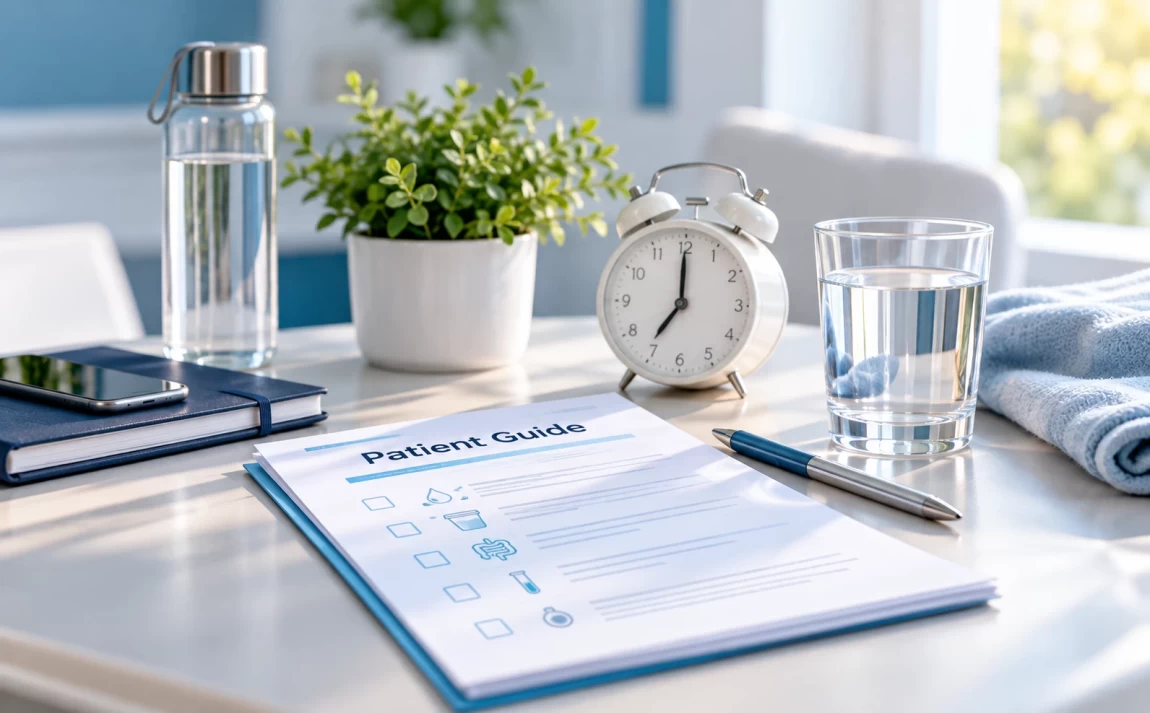

Dear Patients of Invitro Diagnostics,
Laboratory tests represent an essential tool for evaluating the general state of health, establishing a diagnosis, assessing the progression of a condition, and monitoring the effectiveness of the administered treatment.
Collection of biological material can be performed:
- at Invitro Diagnostics medical branches;
- at home, by specialized medical personnel;
- through self-collection (independently), according to provided instructions.
To ensure the accuracy, relevance, and reliability of obtained results, it is important that preparation for laboratory investigations is carried out according to the specific recommendations for each analysis.
Below we present the necessary preparation instructions for certain types of laboratory tests.
HOME COLLECTED SAMPLES
URINE:
Proper preparation for urine analysis
Before collection, perform thorough hygiene of the external genital organs and dry the area with a clean or disposable towel. Discontinue, 48 hours before collection, diuretic medications as well as suppository treatments (48–72 hours), unless otherwise indicated by the physician. The urine sample must be transported to the laboratory within a maximum of 2–2.5 hours or stored at +2…+8°C until transport.
Women: urine collection is recommended before menstruation or 2–3 days after its completion. Before collection, the use of a vaginal tampon is recommended.
General urinalysis (biochemistry and sediment)
Collect the first morning urine. At the beginning of urination, discard a small amount of urine (1–2 seconds), then, without interrupting the urinary stream, place a sterile container and collect 5–40 ml of urine (for infants: 2–10 ml). The container must be tightly closed.
After completion of antibiotic treatment, a minimum interval of 14 days before sample collection is recommended.
24-hour urine collection (daily urine)
Urine is collected over a period of 24 hours. The first morning urine is discarded. All subsequent urine portions, produced during the day, night, and the first morning urine of the next day, are collected in a single container. The container is stored in a refrigerator at +4…+8°C throughout the entire collection period. This condition is necessary because at room temperature changes in urine composition may occur (including reduced stability of certain analytes such as glucose).
At the end of the collection period, the total urine volume is measured accurately, the contents of the container are homogenized, and a sample of maximum 50 ml is transferred into a smaller container. It is not necessary to bring the entire collected urine volume.
On the referral form, the total urine volume (diuresis) must be indicated in milliliters, for example: “Diuresis 1250 ml”. Height and body weight of the patient must also be recorded.
Urine collection for urine culture (with antibiotic sensitivity testing)
For urine culture, collection is recommended at least 10–14 days after completion of antibiotic treatment, unless otherwise indicated. The midstream portion of the first morning urine is collected: the first seconds of urination are discarded into the toilet, and the subsequent urine is collected in a sterile container.
Nechiporenko urine analysis
It is recommended to collect the sample on a different day than the general urinalysis. If both analyses are performed from the same urine portion, results may be inconclusive or contradictory. The midstream portion of the first morning urine (10–40 ml) is collected.
Urine collection for determination of urinary metanephrines (container with preservative)
In the morning, immediately after waking, completely empty the bladder into the toilet. Record the date and time of the start of collection. From this moment, a 24-hour collection period begins.
The next urine portion after initial bladder emptying is transferred into the sterile container prepared for collection. Carefully and following all safety measures, add the preservative into the collection container.
Attention! The vial contains hydrochloric acid (HCl) 25%.
Open the vial carefully.
Avoid splashing or spilling the solution.
Keep out of reach of children.
Do not expose the vial to heat sources.
In case of contact with skin or mucous membranes, rinse immediately with plenty of water.
Seek medical assistance if necessary.
Close the collection container tightly and gently mix the contents. Store the container in a refrigerator at +2…+8°C throughout the entire collection period. Do not freeze.
All urine portions collected over the following 24 hours, including night urine and urine passed during defecation, are collected in an intermediate container and transferred into the main collection container.
The collection ends exactly at the same time the following day. For example, if collection started at 08:00, the final urine sample must be collected at 08:00 the next day and added to the total collected volume.
At the end of the collection period, measure the total urine volume (diuresis) and record it on the accompanying form. Homogenize the entire urine volume by gently mixing the tightly closed container. Then transfer a portion into a transport container.
On the label of the transport container indicate the patient’s full name, the date and time of completion of collection, as well as the total urine volume (ml).
The transport container with the urine sample must be delivered to the laboratory as soon as possible. After completion of the procedure, used materials may be disposed of as household waste.
FECES:
General preparation
Avoid laxatives, rectal suppositories, and oils. Limit, in agreement with your physician, the use of medications that may influence intestinal motility (e.g., belladonna, pilocarpine, etc.), as well as those that may change stool color (iron, bismuth, barium sulfate), 72 hours before collection.
Stool obtained after enemas or after administration of contrast substances based on barium (radiological investigations) is not suitable for analysis.
Stool analysis for intestinal dysbiosis
Collection is performed before starting antibiotic or chemotherapy treatment.
Freshly passed stool is used for analysis. The sample is collected in a sterile container with a screw cap and a special spatula. The container can be obtained from the medical unit.
The collected amount must not exceed 1/3 of the container volume.
The sample must be delivered to the laboratory within a maximum of 3 hours after collection. Until transport, it should be stored at +2…+8°C. Do not freeze.
Stool collection for enterobiasis detection in the perianal region
A special kit provided by Invitro Diagnostics is used.
In the morning, before collection, perianal hygiene must NOT be performed. Collection is performed for 3 consecutive mornings using the spatula included in the kit. The swab/sample is placed into a container with glycerin and stored at +2…+8°C throughout the collection period. After the third collection, the sample must be delivered to the laboratory within 2–4 hours from the last collection.
Instructions for Coproparasitological Examination
The patient collects stool in a clean/sterile container (or from a diaper in small children). The sample is taken from 3–5 different areas of the stool, in a total amount of approximately 3–5 g, into a special collection container.
7–10 days before collection, avoid suppositories, rectal creams, barium, mineral oils, bismuth preparations, laxatives, or antibiotics (unless otherwise indicated).
Avoid contamination of the sample with urine.
The container is tightly closed, placed in a protective bag, and delivered to the laboratory as soon as possible.
Instructions for occult blood test in stool
Collect 1–2 g of spontaneous stool from 3 different areas of the sample. The sample should not be refrigerated immediately after collection (unless otherwise specified by the method). 7 days before testing avoid vitamins, aspirin, iron, red meat, liver, and blood-containing sausages. Do not collect during menstruation (and for the first 3 days after it, if applicable).
The sample may be stored up to 24 hours at +2…+8°C or frozen at −20°C according to the laboratory method. Hand hygiene is recommended before and after collection.
SAMPLES COLLECTED BY MEDICAL STAFF BOTH IN LABORATORY AND AT HOME
BLOOD:
Main pre-analytical factors that may influence laboratory results:
- Medications may affect test results differently.
- Food intake has direct and indirect influence on hormone levels and blood turbidity.
- Physical and emotional stress may cause hormonal and biochemical changes.
- Alcohol affects metabolic processes both acutely and chronically.
- Smoking modifies secretion of biologically active substances.
- Physiotherapy and instrumental investigations may temporarily alter certain parameters.
- Menstrual cycle phase is important for hormonal tests (consult your physician).
- Time of collection is ideally between 7:00–10:00 in the morning.
General rules for blood tests:
- Blood collection is performed in the morning, between 8:00–11:00, on an empty stomach (8–14 hours fasting; water is allowed).
- Avoid overeating the day before collection.
- For complete blood count, hemostasis, and biochemical tests, fasting is mandatory.
- For immunological investigations, infectious markers, and DNA tests, collection may be performed 2 hours after food intake.
- Inform the physician about all medications you are taking; discontinuation may be required before sampling.
- Avoid alcohol 24 hours before, smoking at least 1 hour before, and physical or emotional stress.
- Upon arrival at the laboratory, rest for 10–20 minutes.
Capillary blood (children):
No special preparation is required. Collection is preferably performed in the morning before feeding (breastfeeding) or approximately 2 hours after meals. In urgent cases, collection may be performed at any time.
Important:
Inform medical staff about previous adverse reactions during blood collection.
Mention medications that may affect coagulation (anticoagulants, heparin, chemotherapy).
Report the presence of arteriovenous fistulas or other relevant vascular conditions.
SECRETION FROM PHARYNX, NASOPHARYNX, TONSILS, AND LARYNX (Microbiology / PCR)
Collected before antibiotic treatment or 10–14 days after discontinuation. In the morning after sleep. Do not eat, drink, brush teeth, or smoke 4–5 hours before pharyngeal sampling. For nasal samples, do not use sprays, drops, or nasal rinses 4–5 hours prior.
CONJUNCTIVAL (EYE) SECRETION CULTURE
Collected before starting antibiotic or chemotherapeutic treatment or at least 10–14 days after discontinuation. On the day of collection, do not use eye drops unless prescribed by a physician.
EAR SECRETION CULTURE
Collected before treatment or at least 10–14 days after discontinuation. On the day of collection: do not perform ear hygiene and do not use ear drops unless prescribed.
BREAST MILK BACTERIOLOGICAL ANALYSIS
Collected before breastfeeding or at least 2 hours after. Wash breasts with warm water and baby soap, then dry with sterile wipes. Disinfect nipples and fingers with alcohol wipes. Discard the first milk portion (~0.5 ml), then collect 0.5–1 ml from each breast into sterile containers. Breast milk must not be stored at room temperature for more than 2 hours. The patient must be scheduled so that sampling is performed first after disinfection of the collection room.
UROGENITAL SWAB FOR BACTERIOLOGICAL TESTS IN WOMEN
For cytology, collection is performed at least 3 months after the last sampling. Do not urinate 2–4 hours before collection. Perform intimate hygiene only with clean water, without antibacterial solutions. Do not use suppositories, creams, vaginal tablets, or gels 48–72 hours before collection. Abstain from sexual intercourse 48–72 hours before collection. Collection is performed at least 3 days before menstruation or at least 3 days after its end. After transvaginal ultrasound, wait 24–48 hours before collection. After colposcopy, wait at least 72 hours. After antibiotics or antimicrobials, collection is performed 10–14 days after discontinuation. Do not collect during menstruation or uterine bleeding.
UROGENITAL SWAB FOR BACTERIOLOGICAL TESTS IN MEN
Abstain from sexual intercourse 48–72 hours before collection. Stop antibiotics and uroantiseptics 10–14 days before collection (unless otherwise indicated). Do not urinate 3–4 hours before collection (limit fluid intake after 17:00–18:00 if collection is in the morning). Perform genital hygiene only in the evening with clean water.
PROSTATE SECRETION: PREPARATION FOR PROCEDURE
Mandatory requirements:
Stop medications, especially antibiotics (unless otherwise indicated).
Abstain from sexual intercourse 48–72 hours before collection.
Urinary abstinence is not required.
SPERMOGRAM
Sexual abstinence 2–7 days before collection. Avoid alcohol, medications (except essential therapy), sauna, hot baths, and UHF procedures. For repeat testing, maintain the same abstinence period. Sample is collected at: str. N. Testemițanu 19/1 or str. Albișoara 64/2. Ejaculate is obtained by masturbation into a sterile container. Condoms must not be used. If collected outside the laboratory, transport within 30 minutes at body temperature (36–37°C).
UROGENITAL SWAB FOR DNA TESTS
WOMEN: Do not urinate 2–4 hours before collection. Perform hygiene only with clean water. Avoid suppositories, creams, gels 48 hours before. Abstain from sexual intercourse 48–72 hours before. Collection 3 days before or after menstruation. After ultrasound, wait 24–48 hours. After antibiotics, collect 10–14 days after discontinuation.
MEN: Abstain from sexual intercourse 48–72 hours before collection. Stop antibiotics and uroantiseptics 10–14 days before (unless indicated). Do not urinate 3–4 hours before collection. Perform hygiene only in the evening with clean water.
CERVICAL-VAGINAL CYTOLOGICAL EXAMINATION PREPARATION
3 menstrual cycles (approximately 3 months) must pass since last collection. Do not urinate 2–4 hours before collection. Hygiene only with clean water. Avoid intravaginal products 48 hours before. Abstain from sexual intercourse 48–72 hours before. Collection 3 days before or after menstruation. After ultrasound 24–48 hours. After antibiotics 10–14 days. After colposcopy at least 72 hours.
URINE TEST WITH 2, 3, 4 GLASSES
Abstain from sexual intercourse 48–72 hours before collection. Stop antibiotics and uroantiseptics 14 days before (unless otherwise indicated). Do not urinate 3–4 hours before collection. Hygiene only with clean water.
SALIVA PCR TEST PREPARATION
Do not brush teeth before collection. Do not eat or drink 1–2 hours before collection.
DOUBLE TEST
Performed at 11–13 weeks of pregnancy. Recent ultrasound required (within 24 hours). Recommended in the morning, fasting (minimum 2 hours after last meal).
TRIPLE TEST
Performed at 15–20 weeks of pregnancy (ideally 16–18 weeks). Recent ultrasound required (within 24 hours). Recommended in the morning, fasting (minimum 2 hours after last meal).
DEMODEX
Face: do not wash or apply creams/powder on the day of sampling.
Eyelids: do not use eye drops for 3 days before collection.
Ears: do not wash or use topical medications for 1–2 days before collection.
ALLERGOLOGICAL INVESTIGATIONS
Fasting required. Glucocorticoids may affect results. Antihistamines do not influence results.
GLUCOSE TOLERANCE TEST
Requires medical consultation. Fasting required. High-carbohydrate diet (minimum 150 g/day) for 3 days prior. Avoid physical stress, alcohol, and smoking. Blood is collected for baseline glucose, then 75 g glucose solution is administered, with repeated sampling at 60 and 120 minutes.
ANTIBODIES TO HIV/AIDS
Patient must present identification document. Collection may be performed in branches without a physician. Results are confidential but not anonymous. Recommended in the morning (7:00–11:00).
PATERNITY TEST
Genetic test using buccal epithelial swabs from alleged father and child. 4–5 hours before collection: no food, drinks, tooth brushing, mouthwash, gum, or smoking. Both parents must present identification documents; child must present birth certificate or ID if adult. Referral documentation is completed by physician. Collection sites: Chișinău, str. N. Testemițanu 19/1; Chișinău, str. Albișoara 64/2; Bălți, str. Decebal 126.
IMPORTANT FOR PATIENT CONVENIENCE
If 2–3 urine or stool tests are requested, separate containers are not mandatory. For urine investigations (Nechiporenko, urine culture, biochemical urine with sediment), sample must be midstream urine in a sterile container. For stool investigations requested by different departments, the same collection rules apply.
ULTRASOUND PREPARATION (USG)
Correct preparation improves image clarity and diagnostic accuracy.
ABDOMINAL ULTRASOUND
2–3 days before, avoid gas-forming foods. Examination is performed fasting. If scheduled in the afternoon, a light breakfast is allowed. Inform physician about medications. Not recommended immediately after endoscopy or colonoscopy.
PELVIC ULTRASOUND
Transabdominal: full bladder, drink ~1 liter water 1–2 hours before, do not urinate.
Transvaginal: empty bladder, no special preparation.
Transrectal: bowel empty, possible enema in morning.
PROSTATE ULTRASOUND
Transabdominal: do not urinate 3–4 hours before, drink ~1 liter water 1 hour before.
Transrectal: enema required, no bladder filling.
URINARY BLADDER ULTRASOUND
Full bladder required, do not urinate 3–4 hours before, drink ~1 liter water 1 hour before.
BREAST ULTRASOUND
Recommended in first 10 days of menstrual cycle.
THYROID AND KIDNEY ULTRASOUND
No special preparation required.